Prologue
Today I want to write about the offline meetup and conference we held for the "FE Blog Posting Study" that I run. Unlike my usual technical posts, I'll be writing this one casually like a vlog — walking through what we did in chronological order — so feel free to kick back and read through it.
About the study
I currently run an online study group called "FE Blog Posting Study," where members write frontend-related blog posts every week. We opened recruitment in early August, and now six frontend developers (including myself) — a mix of working professionals and job seekers — gather weekly to write posts, give presentations, and share knowledge and thoughts about development.
Thanks (?) to our deposit + penalty fee system, we reached a consensus to hold a monthly offline meetup, and the members enthusiastically suggested we try running a small-scale conference.
Presentation format and topics
Since this was our first event, we decided to keep things relaxed with no strict time constraints. The topics were proposed by one of the study members, and we ended up presenting in pairs. There were three topics: "The Paradigm of Next.js 13," "The Paradigm of React 18," and "Developer Growth." I was assigned to present on "The Paradigm of Next.js 13."
The Exciting First Meeting
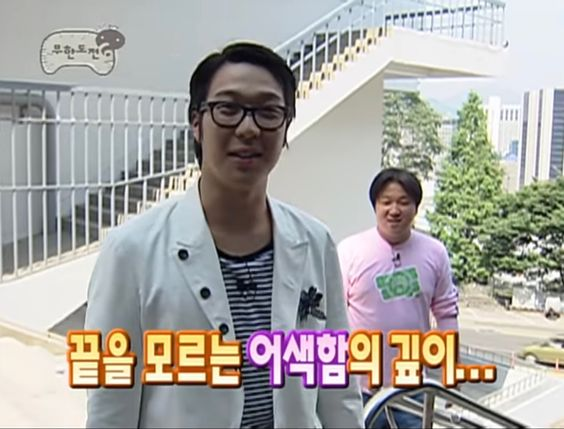

Sunday, September 10th
The big day had arrived. That particular week had been absolutely insane — I'd been scrambling to prepare my presentation while juggling everything else. (Forbes' pick for Most Murderous Schedule of 2023.) My plate was completely full: a solo assignment and team project for the pre-onboarding internship, a coding test, presentation prep, and a TOEIC exam all at once.
I finished the TOEIC exam from 9 AM to noon, then rushed to a nearby cafe to put the finishing touches on my slides. I built the PPT and wrote my script based on the research and notes I'd been putting together over the past few days. After grinding from 1 to 4 PM on prep, I hopped on a red bus headed for Gangnam Station. Honestly, looking back, I was absolutely exhausted on that bus... lol. Still, the excitement of meeting new people outweighed the fatigue.
4:50 PM, Exit 9 of Gangnam Station
Heart pounding. The moment I finally meet my study members in person..!
Aside from the very first week, we'd been online with cameras off, so I was expecting things to be pretty awkward — equal parts excited and nervous. Fortunately, since we had seen each other's faces during that first session, nobody ended up standing right in front of each other without recognizing them!
It turned out that even the more introverted members were proactive, so it wasn't nearly as awkward as I'd feared. Having "frontend development" as a shared interest made small talk flow surprisingly naturally right from the start.
Our Venue!
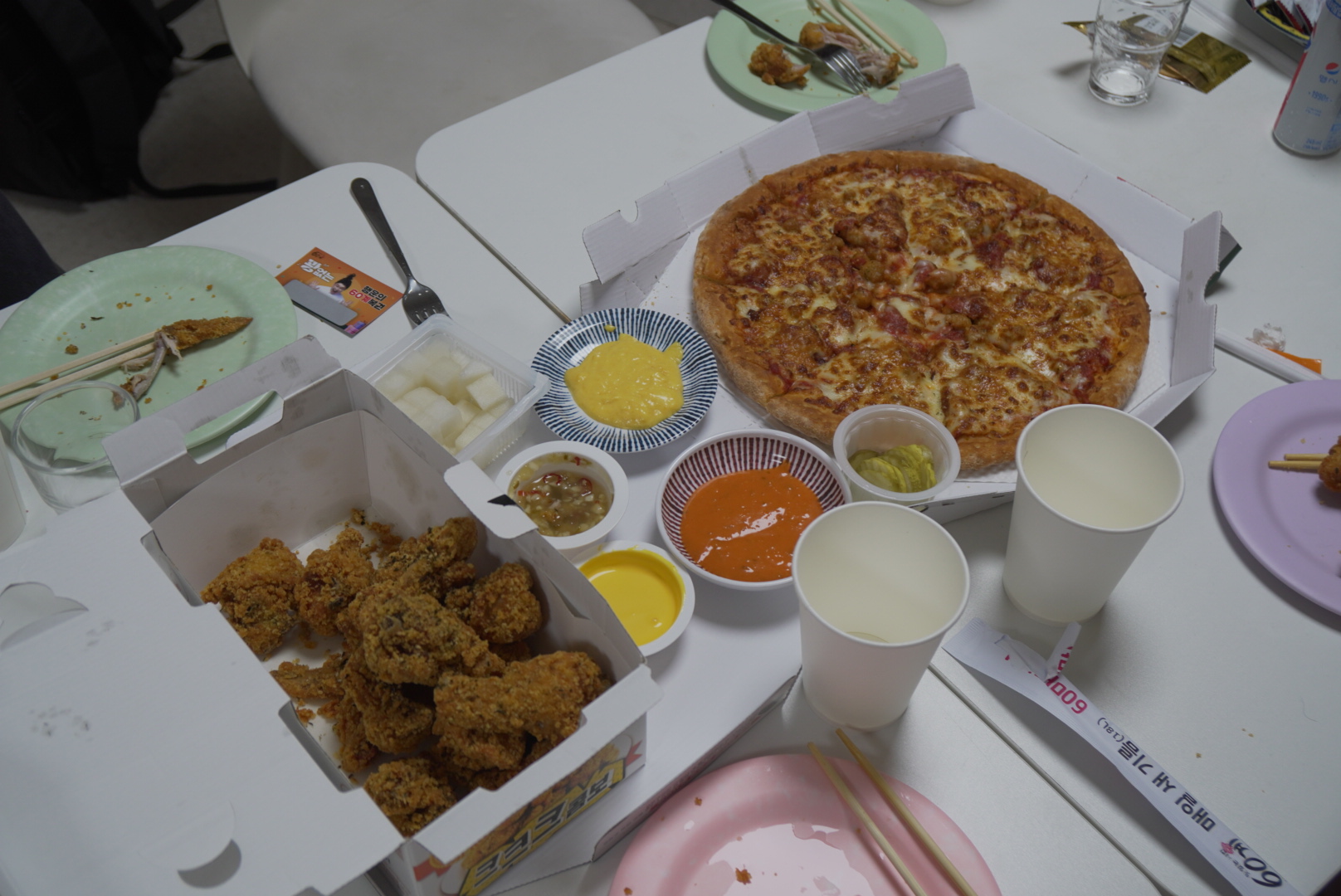
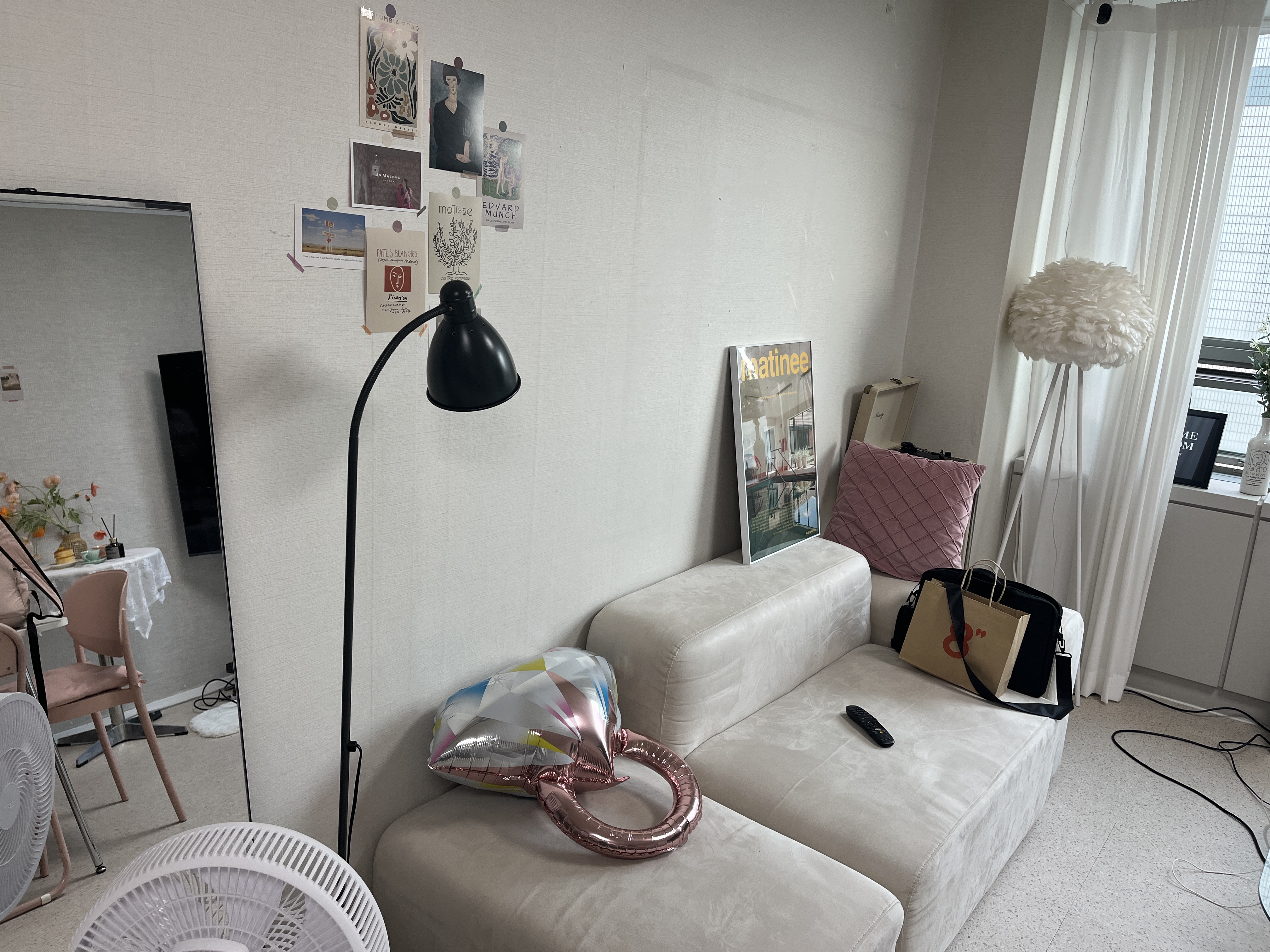
Arriving at the space!
We made a quick convenience store stop to grab snacks to ease the nerves, then walked about five minutes to the party room we'd booked. We found it through Space Cloud, and it was every bit as good as I'd hoped! It looked like a Gangnam studio apartment converted into a rental party room. It was the perfect private space for presentations, dinner, and conversation.
I'd originally only thought of booking a study room and had reserved a Wing Study in Gangnam, but I'm really glad we switched to this kind of party room setup — and it was another study member's idea, a brilliant one at that. (If we'd been in a study room instead, I think the atmosphere would have been much stiffer and more formal for what was already a nerve-wracking first presentation experience.)
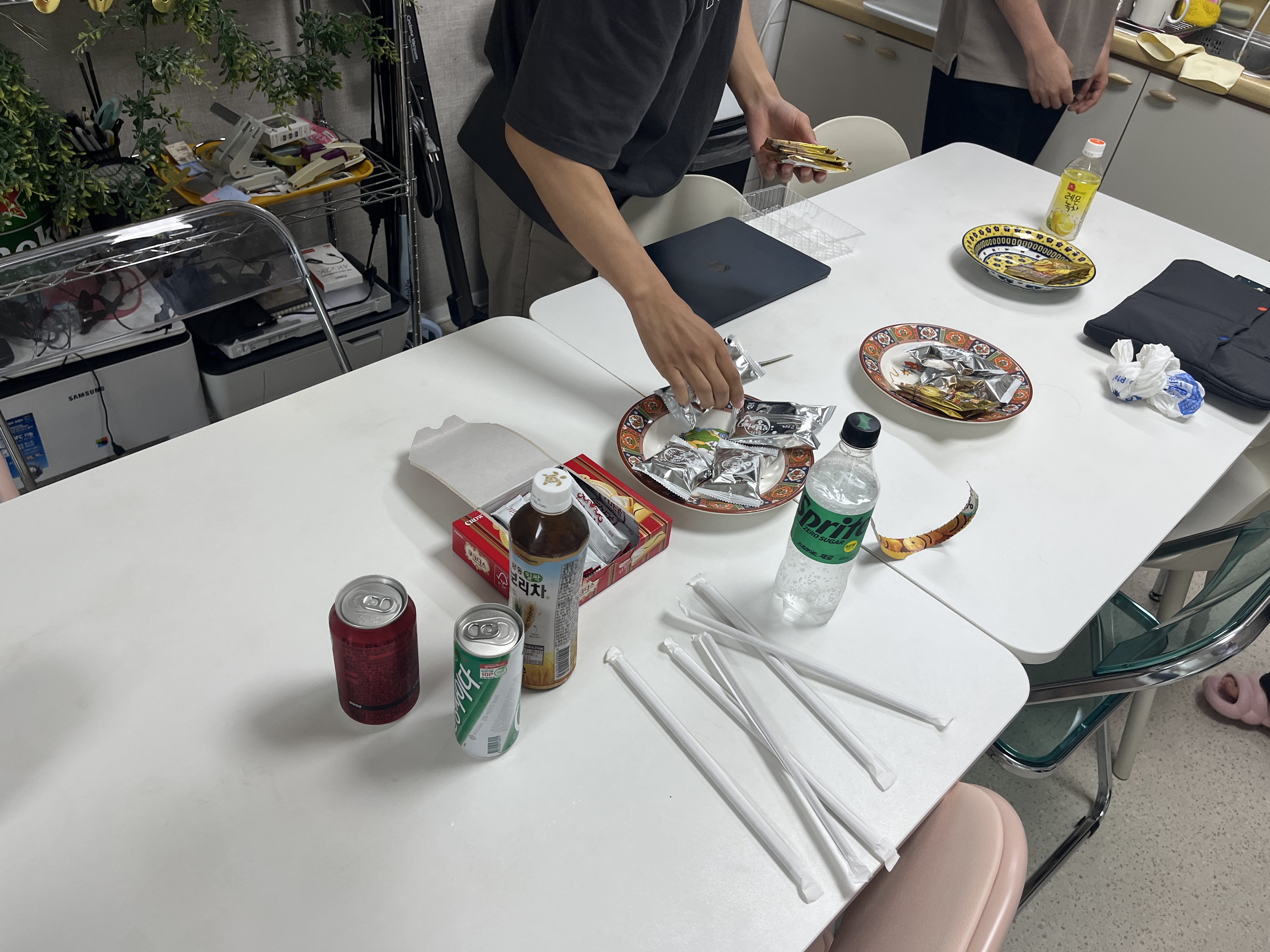
Icebreaker (?)
We didn't formally label it as an icebreaker, but since it was everyone's first time presenting, I wanted us all to be relaxed and comfortable, so we took our time eating snacks, chatting, and easing into things before getting started. A little casual conversation about development and everyday life to mentally prepare for the presentations ahead!
Conference Time!
5:35 PM — Presentations begin!
After thirty minutes of warming up (?), we kicked off the main event. We first settled on the order, which broke down into two broad categories: "Next.js 13" and "Developer Growth." We decided to tackle the heavier technical topic first, so the presentation I prepared with another study member went first.
First up, huh. Well, better to get it over with — and sure enough, once I finished, the tension melted away and I was able to enjoy everyone else's presentations in a much more relaxed state.
First Presentation: The Paradigm of Next.js 13
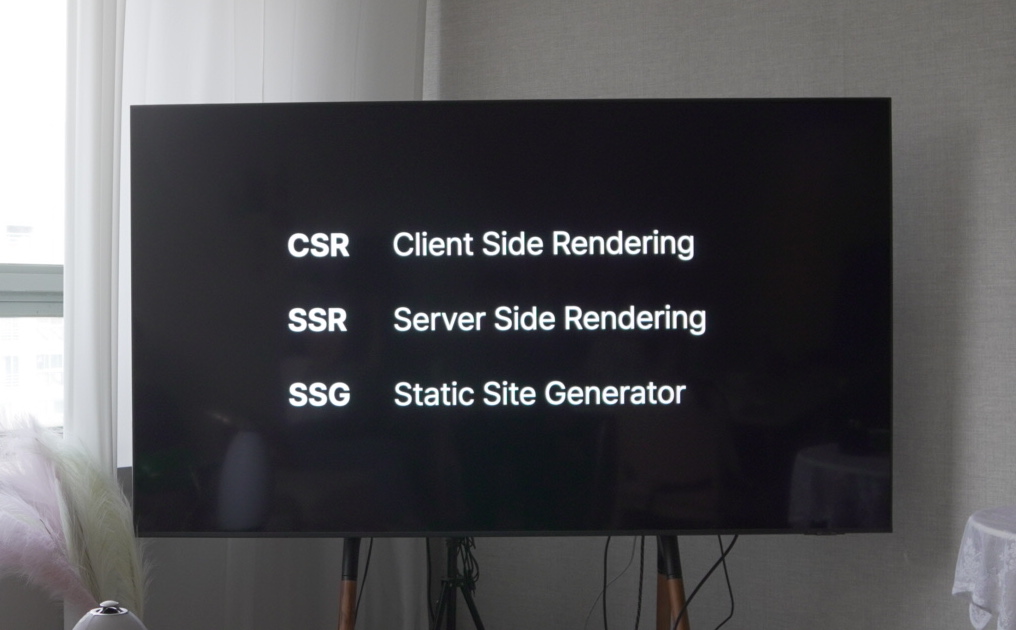
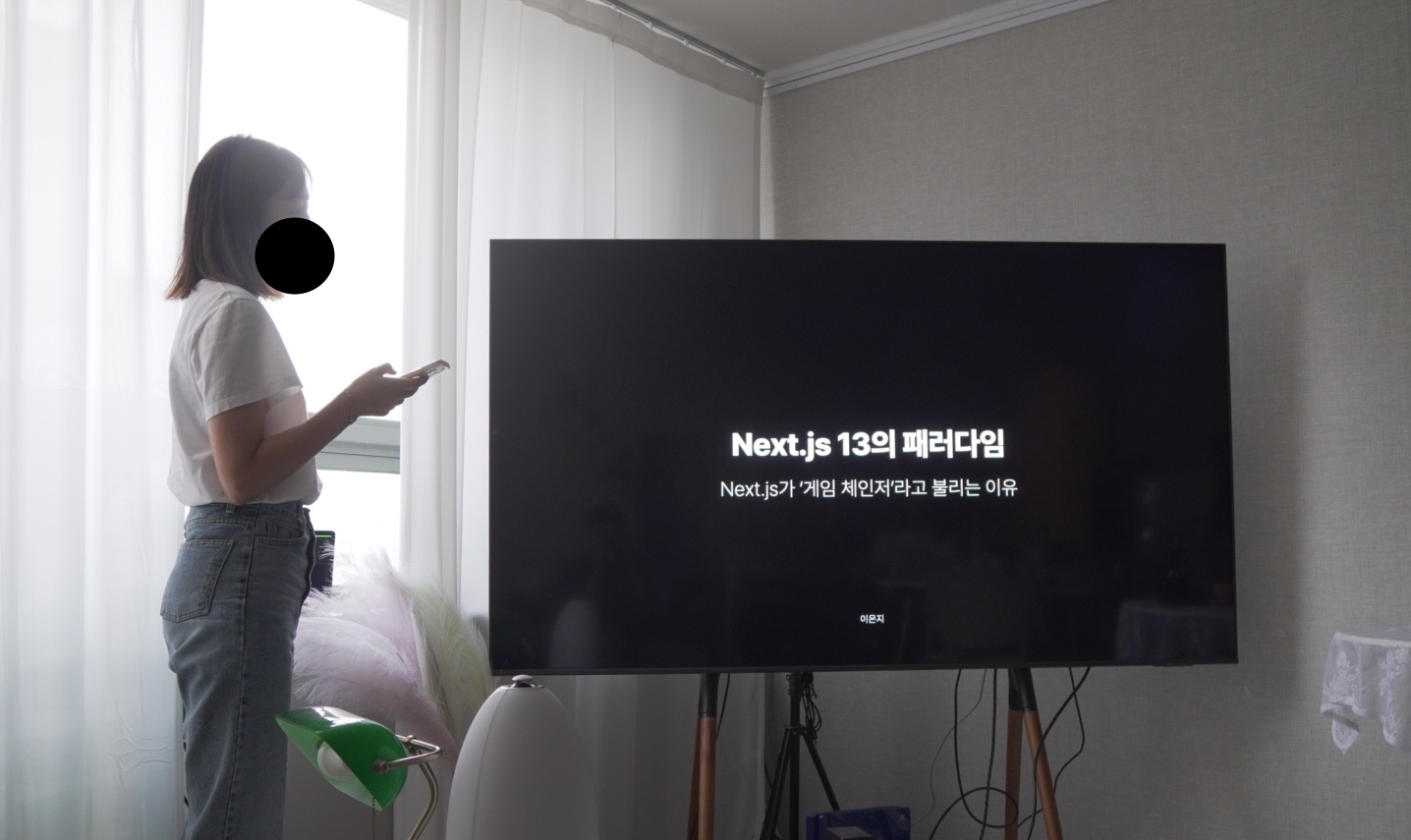
"Hi, I'm a talking potato."
After my co-presenter wrapped up her talk on Next.js rendering strategies, it was my turn. (We both covered Next.js, but each of us focused on our own area of interest within the topic.)
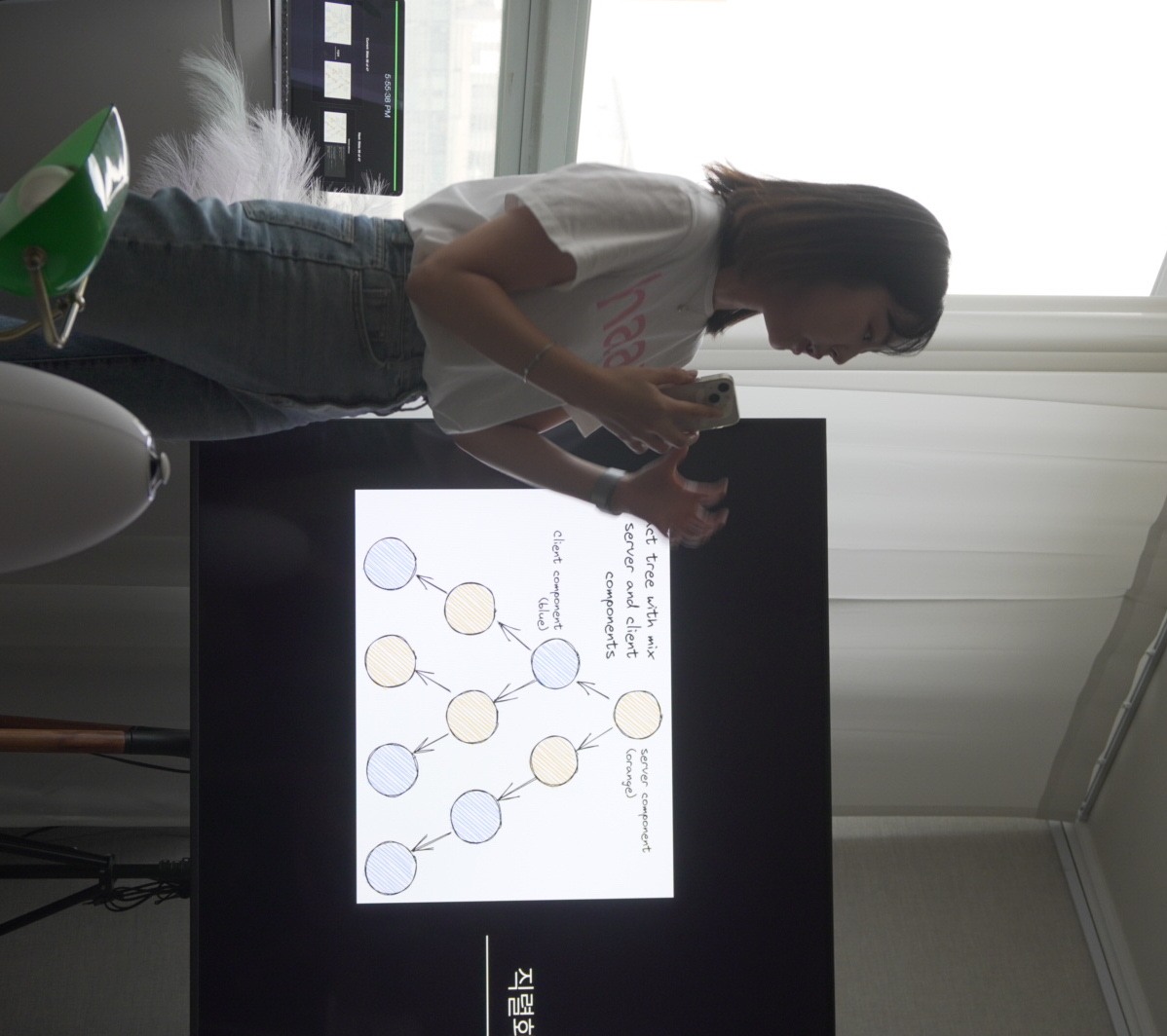
To truly capture the paradigm of Next.js 13, I wanted to understand the philosophy behind it — so I watched all of the Next.js 13 keynote videos and analyzed them thoroughly. Drawing on those insights, I structured my presentation around three keywords that I felt best captured the paradigm: Routing, Rendering, and Turbopack.
I presented the paradigm of Next.js 13 through its new features while weaving in my own perspective. Specifically, I focused on what Vercel chose to emphasize when introducing Next.js 13, and what direction I believe they're pushing toward — sharing my own interpretation.
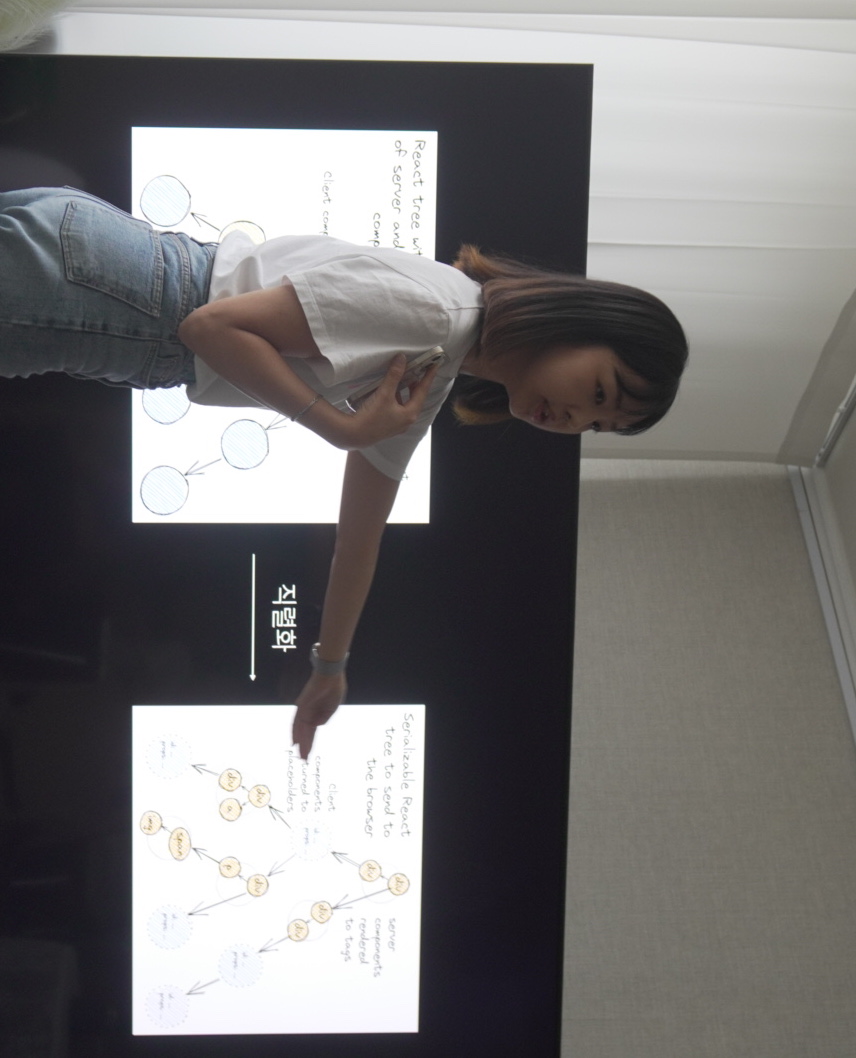

Passion, passion, passion
That's me explaining how the React component tree gets serialized with the introduction of Server Components. Ha. I was so focused on the explanation that I didn't even notice anyone was taking pictures, but I do like the look of someone explaining some impressive technical concept... (lol)
The technical content made it challenging both to prepare and to present, but working through it was a great learning experience and I felt myself growing through it.
*I'll cover the content of my presentation in detail in a separate post.
Second Presentation: Is Being Good at Coding Enough to Become a Great Developer?
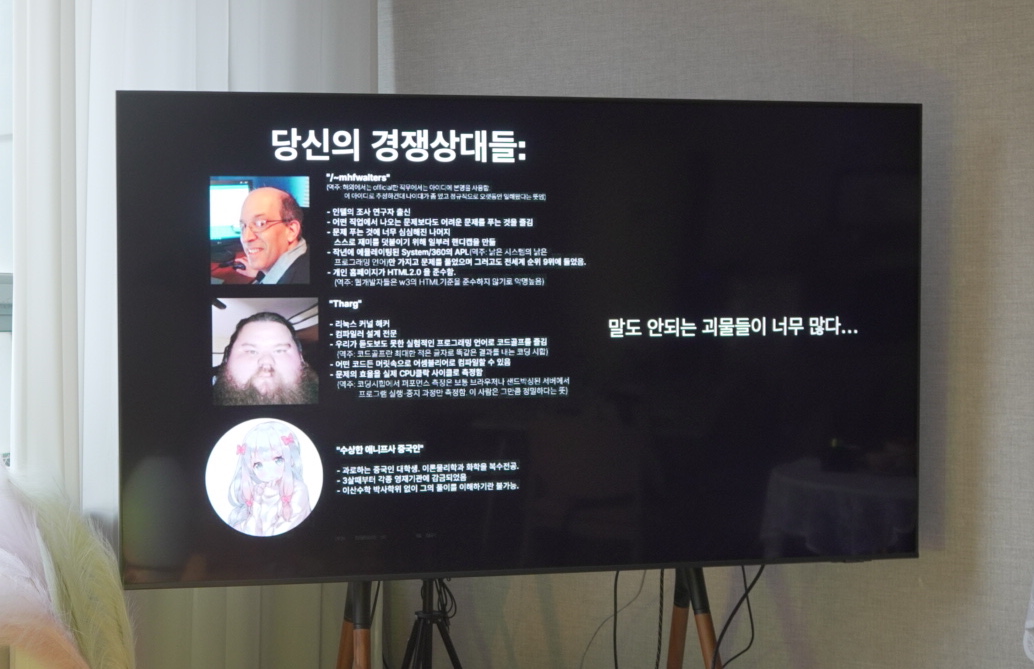
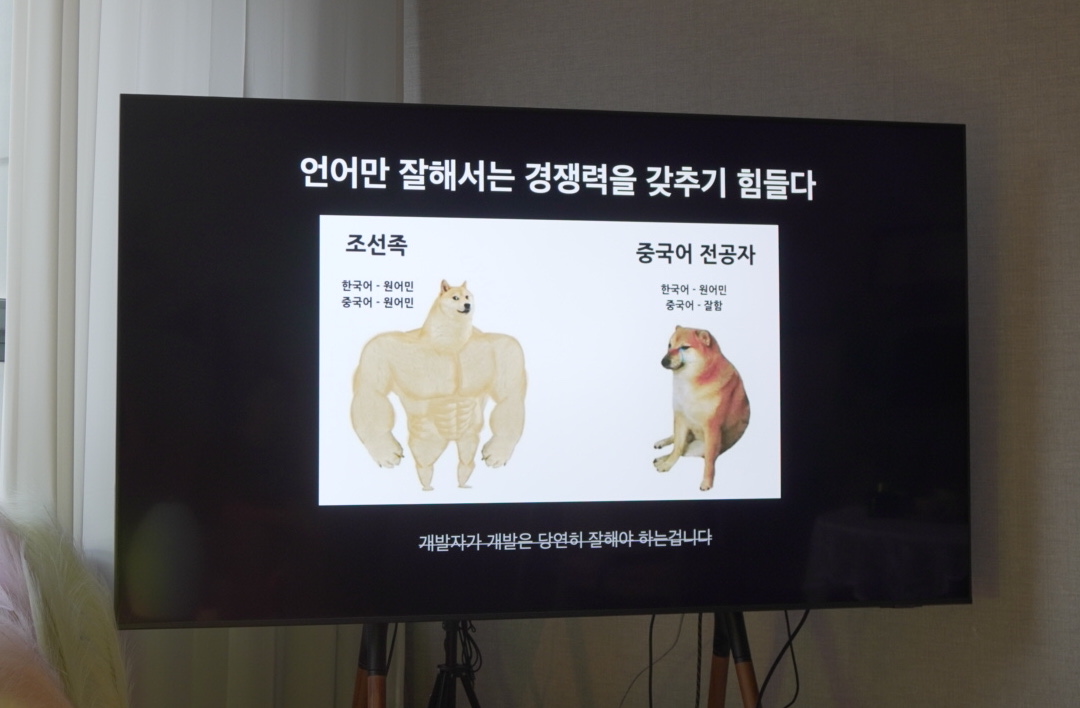
Technical skill is just one piece of what makes a great developer.
This was a great opportunity to reflect on my own strengths as a developer beyond pure coding ability. The presenter showed us a list of "qualities of a great developer" from a real senior developer — and out of the five items on the list, only one was about technical skill. The takeaway was clear: the qualities that matter most for a developer go far beyond coding.
She then introduced what she considers her own strengths and shared experiences where those strengths had made a real difference. "Being good at reading people and understanding psychology" was her strength, and while that might sound vague on its own, she grounded it in concrete examples that made it genuinely convincing.
So what are my strengths?
For the roughly one year since I started studying to become a developer, I'd been focused almost entirely on "how can I get better?" — building up technical knowledge and skills. But after completing SSAFY (Samsung Software Academy For Youth) and going through three team projects, the bigger question that stayed with me was: "What does good collaboration actually look like?"
This presentation added another layer to that reflection: what are my own strengths? It's a genuinely hard question.
Right now, my biggest areas of uncertainty are: how to develop my soft skills, what makes me uniquely valuable, and how to communicate that value to others. It's something I'll need to keep working through — but this experience gave me a clear reminder that when writing a resume, I need to thoughtfully articulate not just my technical abilities but the strengths that go beyond them.
Third Presentation: What It Takes to Become a Good Frontend Developer
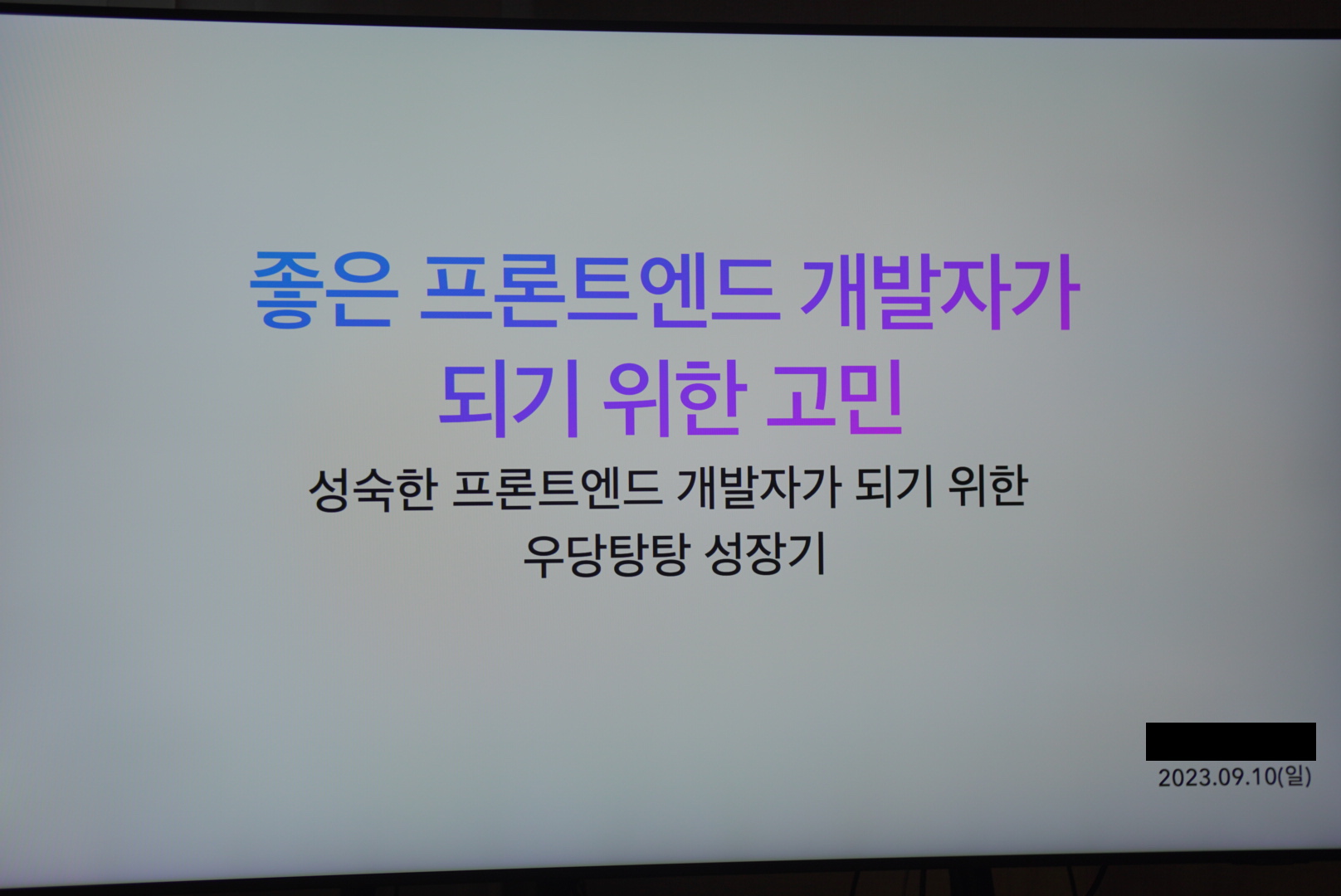
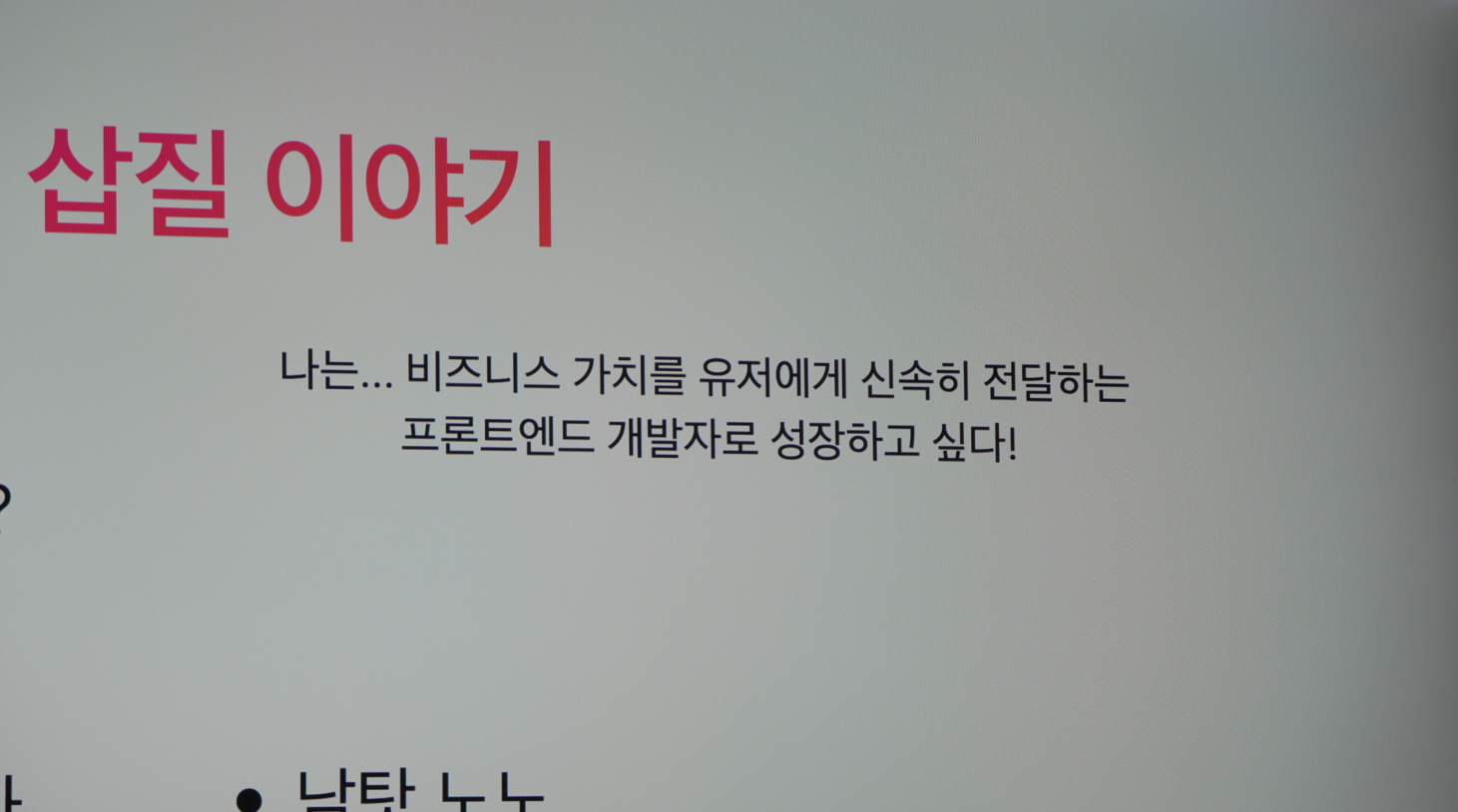
This presenter is a third-year frontend developer who walked us through the questions she wrestled with as a junior developer, the conclusions she reached, the kind of developer she aspired to become, and the methodologies she used to get there.
Good code matters because it lets you adapt to change — and that ultimately means delivering business value faster.
That was my main takeaway from this talk. I came to understand from a business perspective why clean code matters, and why code with strong extensibility and maintainability is so important.
Recently, through the pre-onboarding internship, I'd started to develop a clearer sense of what good code design looks like. Over the past year studying at SSAFY, I'd felt the need for it acutely but had no idea how to approach it — this was the first time I'd gotten a real, satisfying answer to that itch. Good code, I realized, comes from reading a lot of good code.
On top of that, this presentation introduced concrete design approaches I could apply right away, which I was genuinely grateful for. At a time when I'm beginning to realize that React's useState and useEffect aren't the whole story, this talk helped expand my thinking once again.
I want to become a developer, too.
On the other hand, this talk made me want so badly to actually be a frontend developer already. Seeing her talk about the struggles, frustrations, and growth that come with real-world work — I couldn't help but think, I want to experience all of that as soon as possible. (I'm seriously ready, okay? Just hire me. Please.)
Fourth Presentation: Developer Growth — Why I Started Coding and How I Study
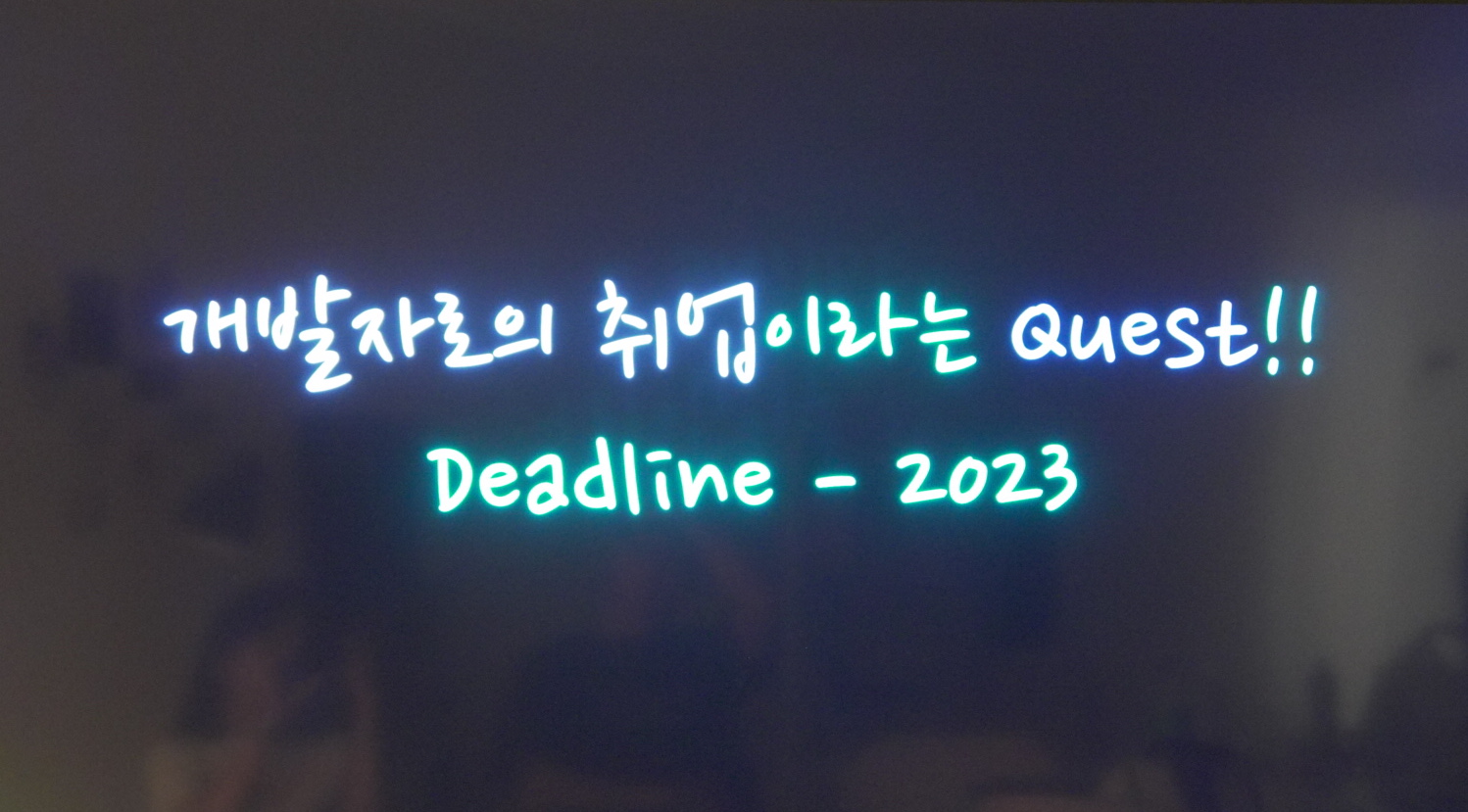
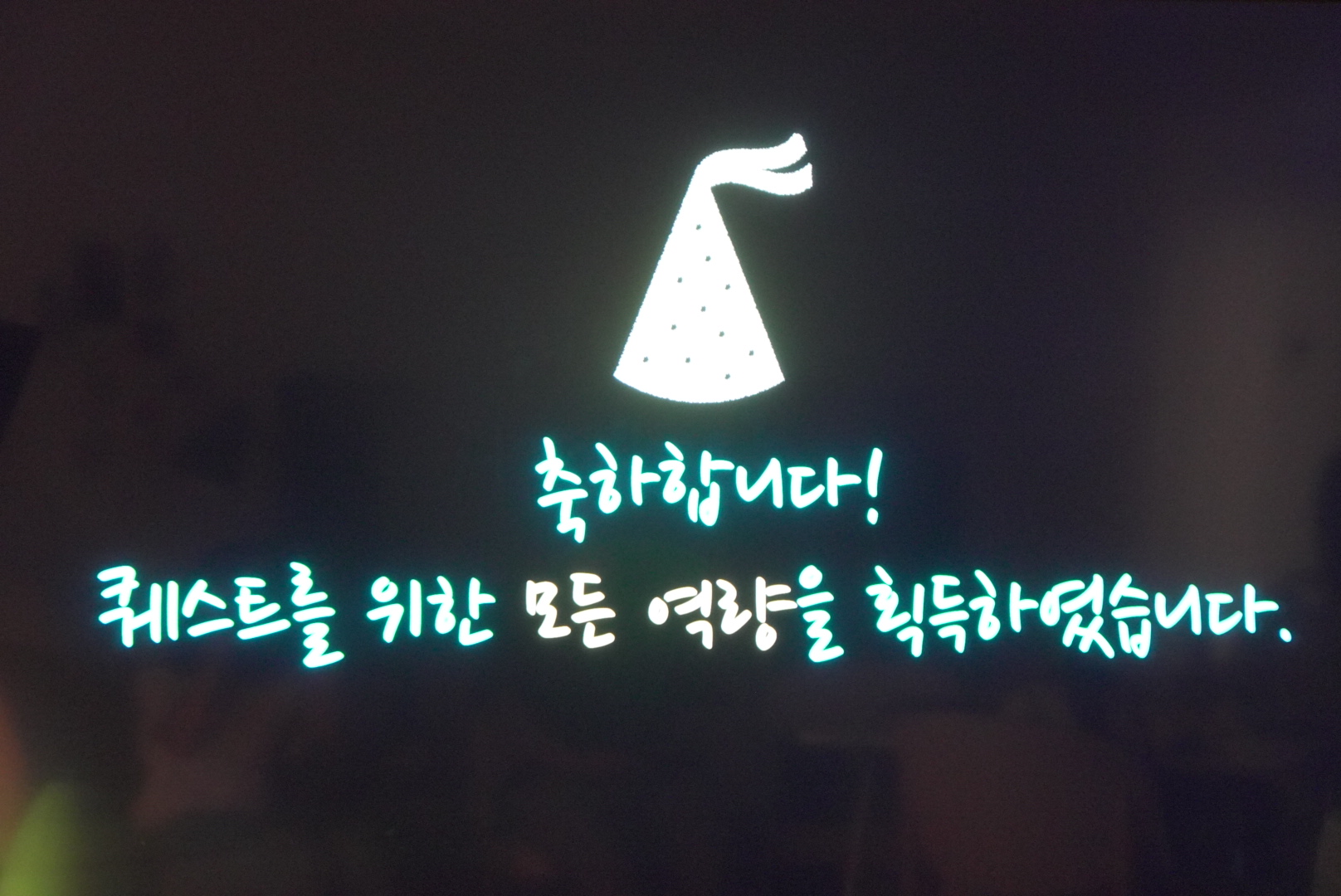
Quest 1: Become a Developer
The final presentation was given by a fellow job seeker, so there was a lot I could personally relate to. Right off the bat, the fact that her current quest is "Become a Developer!" hit home — that's my goal for this year too.
Centering around the keyword "quest," she walked us through what got her into coding and how she's been approaching her studies. Her consistency and dedication came through clearly. Seeing the cycle of noticing gaps, diving in to fill them, and pushing forward again — it felt a lot like my own journey right now.
Document everything carefully!
One part of her study approach that really stood out to me was the "4-step dev journal" she keeps. I also write dev journals when I'm working on things — partly for when I write blog posts later, partly as reference material for interviews, and partly as a personal database for solving similar problems in the future. But I don't write them as carefully as she does; I tend to just jot things down as I go. Hearing this made me reflect — when I go back through my old entries, there are plenty of gaps and passages that the current me struggles to understand. I made a note to myself: be more detailed when documenting going forward!
Great Work, Everyone!
https://r2.jjalbot.com/2023/03/P8lHTYwXQd.mp4
Everyone, you did an amazing job!!
I want to say thank you again to everyone for coming so well prepared. Every single presentation was wonderful. As one of the study members put it, each person brought their own unique strengths to the table, and there was something to learn from every one of them. It was so enriching and fun that despite being completely exhausted, I somehow stayed energized and in high spirits the whole time.
By the time all five presentations were done, the sun had started to set. Time to recharge after all that talking and listening.
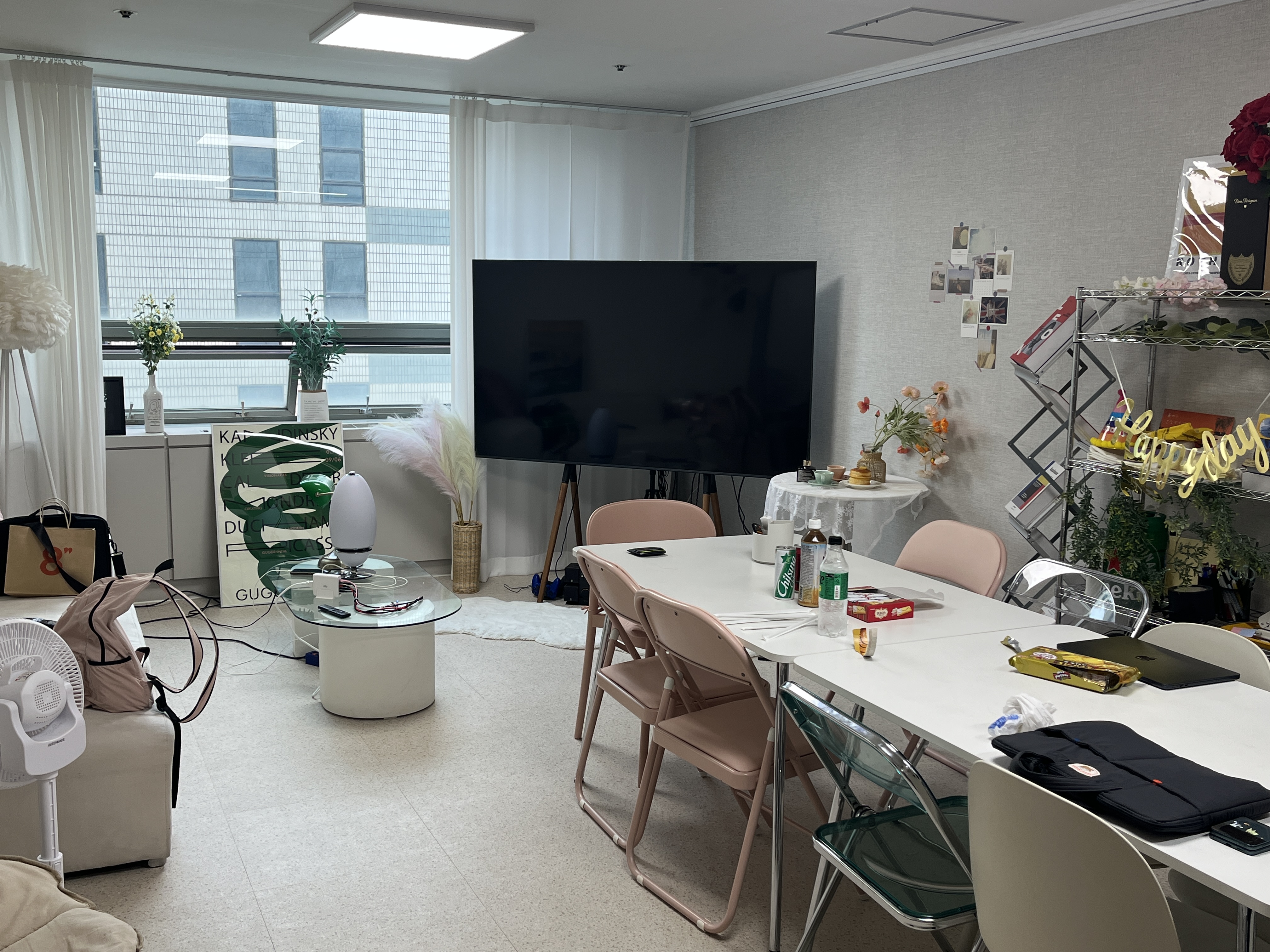
We ate fried chicken and pizza while talking non-stop about everyday life and development, and the time flew by. When I first booked the space, I'd wondered if four hours might be too long — it wasn't.
Thank you again to everyone for participating so enthusiastically. I can't wait to see where our study goes from here!
Reflections
Presenting? More manageable than I expected.
When I was younger, speaking in front of a group felt almost terrifying — but maybe I've grown into it? It went better than I thought. I've always been someone who said "I'm really bad at talking," and I genuinely lacked confidence in that area. This experience showed me that public speaking, like anything else, becomes more natural with practice. Experience is everything.
Getting absorbed in the content seems to calm the nerves.
What struck me as interesting was that presenting technical content actually seemed to reduce my anxiety rather than increase it. Looking back, I was so focused on recalling how I'd internalized each concept and translating it into words that I had no bandwidth left to worry about the things that usually make me nervous — like people's facial expressions and reactions.
I found that genuinely fascinating, and it made me want to take on another challenging technical topic next time. Though since I went technical this time, I think I'd like to try something more personal and perspective-driven for the next offline meetup.
It was so much fun!
Listening to others, asking questions, exchanging opinions — I genuinely loved every part of it. I think I just fundamentally enjoy sharing my thoughts with others. (Confirmed N — MBTI.) What I loved most was that every single presentation gave me something new to think about or realize, and through each talk I got to vicariously experience someone else's journey. Listening, finding what I was curious about, asking questions, hearing answers, and discussing ideas — it all helped me build my own capacity to think. This experience helped me understand why developers are so deeply invested in community. Being able to share experiences and grow together — that's what makes it so valuable.
A study we're building together!
Finally, it's rare to get this kind of synergy from a group of strangers, and I think we're heading in a great direction thanks to genuinely great study members. I hope we keep creating spaces like this, building positive momentum, and enjoying the process together. And as the one running it, I'm committed to doing my part to make that happen!
References
If you found this post interesting, I'd also recommend checking out the recaps written by the other study members!